
Your vocation, our passion
We are your one stop creative agency providing
Business IT Services.
Top Notch Digital Marketing Agency that drives revenue
and propel your business to new heights.
We create value for industries like Fin-tech |
Healthcare | Ed-tech | Beauty | Travel | E-commerce
and more.
How to Choose a Web Development Company: A Complete Buyer's Guide

Choosing the right web development company means looking beyond price. Evaluate each agency's experience, portfolio, technical expertise, communication, and long-term support. The best partner understands your goals and builds a website designed to support your long-term growth. A structured evaluation process helps you compare agencies objectively and choose a partner that can support your business for years to come.
Why Your Choice of Web Development Company Matters

Your website is often the first impression potential customers have of your business. Choosing the right web development company affects far more than your website's appearance—it influences performance, search visibility, user experience, and your ability to grow online.
Instead of selecting an agency based on price alone, evaluate whether they understand your business goals and can deliver a solution that supports your long-term success.
The best web development companies focus on solving business problems, not just building websites.
Step 1: Define Your Business Goals Before Contacting Agencies

Before contacting web development companies, define what you want your website to achieve. Clear business goals help agencies recommend the right solution instead of making assumptions.
Ask yourself:
- What is the primary purpose of the website?
- Who is the target audience?
- What actions should visitors take?
- Will the website require integrations or custom functionality?
- How should it support future business growth?
Every business has unique requirements. A corporate website, ecommerce store, and SaaS platform each require a different development approach.
During discovery workshops, businesses often focus on design while overlooking functional requirements and long-term growth. Defining these early helps prevent costly changes later in the project.
Common Website Objectives
| Business Goal | Recommended Solution |
|---|---|
| Generate Leads | Custom business website |
| Sell Products Online | Ecommerce website |
| Build Brand Authority | Corporate website |
| Customer Self-Service | Custom web portal |
| Booking or Scheduling | Custom functionality |
| International Expansion | Scalable multilingual website |
Defining your goals early leads to more accurate timelines, budgets, and project outcomes.
Step 2: Evaluate the Company Beyond Its Website
A professional website creates a good first impression, but it shouldn't be the only reason you choose an agency. Instead, evaluate whether the company demonstrates consistent quality across its work and has experience solving business challenges similar to yours.
Look for evidence such as:
- A portfolio of relevant projects
- Relevant industry experience
- Client testimonials and case studies
- Technical expertise
- Years of experience
- A skilled, well-rounded team
An experienced web development company should be able to explain how it solves business problems—not just showcase attractive website designs.
Check Independent Reviews
A portfolio shows what an agency has built, while client reviews reveal what it's like to work with them. Look for consistent feedback about communication, project management, technical expertise, and post-launch support. A few negative reviews aren't necessarily a concern, but recurring complaints about missed deadlines or poor communication deserve attention.
Look for reviews on independent platforms such as Google, Clutch, or other trusted review sites rather than relying solely on testimonials published on the agency's own website.

Step 3: Review Their Portfolio Carefully
A portfolio reveals much more than an agency's design style. It shows whether they have experience delivering websites that meet business objectives similar to yours. Whenever possible, ask about the results those projects achieved, such as increased leads, improved conversions, or faster website performance.
When reviewing a portfolio, look for:
- Professional design and branding
- Mobile responsiveness
- Fast-loading websites
- Clear navigation and user experience
- Relevant industry experience
- Custom functionality where required
If your project involves custom functionality or industry-specific requirements, ask to see comparable projects and the results they achieved.
Portfolio Evaluation Checklist
| Evaluation Area | What to Look For |
|---|---|
| Visual Design | Professional and modern |
| User Experience | Clear navigation |
| Mobile Experience | Fully responsive |
| Performance | Fast-loading pages |
| Functionality | Features relevant to your project |
| Industry Experience | Similar businesses or use cases |
| Business Results | Measurable outcomes or case studies |
Don't ask, "Have you built websites?" Ask, "Have you delivered results for companies like ours?"
Step 4: Evaluate Technical Expertise

A well-designed website also needs a strong technical foundation. Choose a web development company with experience building secure, high-performing websites that can grow with your business.
Ask whether the agency has experience with:
- Custom website development
- CMS platforms (such as WordPress)
- API and third-party integrations
- Website security
- Performance optimization
- Technical SEO
The best agencies explain technical decisions in clear business terms, helping you understand how their recommendations support your goals.
Technical expertise isn't about using the latest technology—it's about choosing the right technology for your business, budget, and long-term growth.
Step 5: Understand Their Development Process

A clearly defined development process reduces misunderstandings, keeps projects on schedule, and improves collaboration throughout the project. Ask agencies to explain how they manage projects from discovery through launch.
Typical Website Development Process
| Phase | Purpose |
|---|---|
| Discovery | Understand business goals and requirements |
| Planning | Define scope, timeline, and technology |
| UI/UX Design | Create user-focused designs |
| Development | Build website functionality |
| Testing | Verify quality, security, and performance |
| Launch | Deploy the website |
| Ongoing Support | Maintain and improve the website |
Typical Website Development Timelines
Project timelines vary based on complexity, custom functionality, integrations, and client feedback. The following estimates provide a general expectation.
| Website Type | Typical Timeline |
|---|---|
| Small Business Website | 3–6 weeks |
| Corporate Website | 6–10 weeks |
| Ecommerce Website | 8–16 weeks |
| Custom Web Application or Platform | 3–6 months |
Don't judge an agency by the shortest timeline. A realistic schedule that includes proper planning, testing, and quality assurance usually produces better long-term results than a rushed launch.
Why Communication Matters
Even the most technically skilled developers can struggle if communication is poor.
Throughout the project, you should receive:
- Regular progress updates
- Clear timelines
- Transparent pricing
- Honest recommendations
- Prompt responses to questions
Good communication minimizes misunderstandings and keeps projects on schedule.
It also builds a collaborative relationship that extends beyond the website launch.
Step 6: Compare Value, Not Just Price
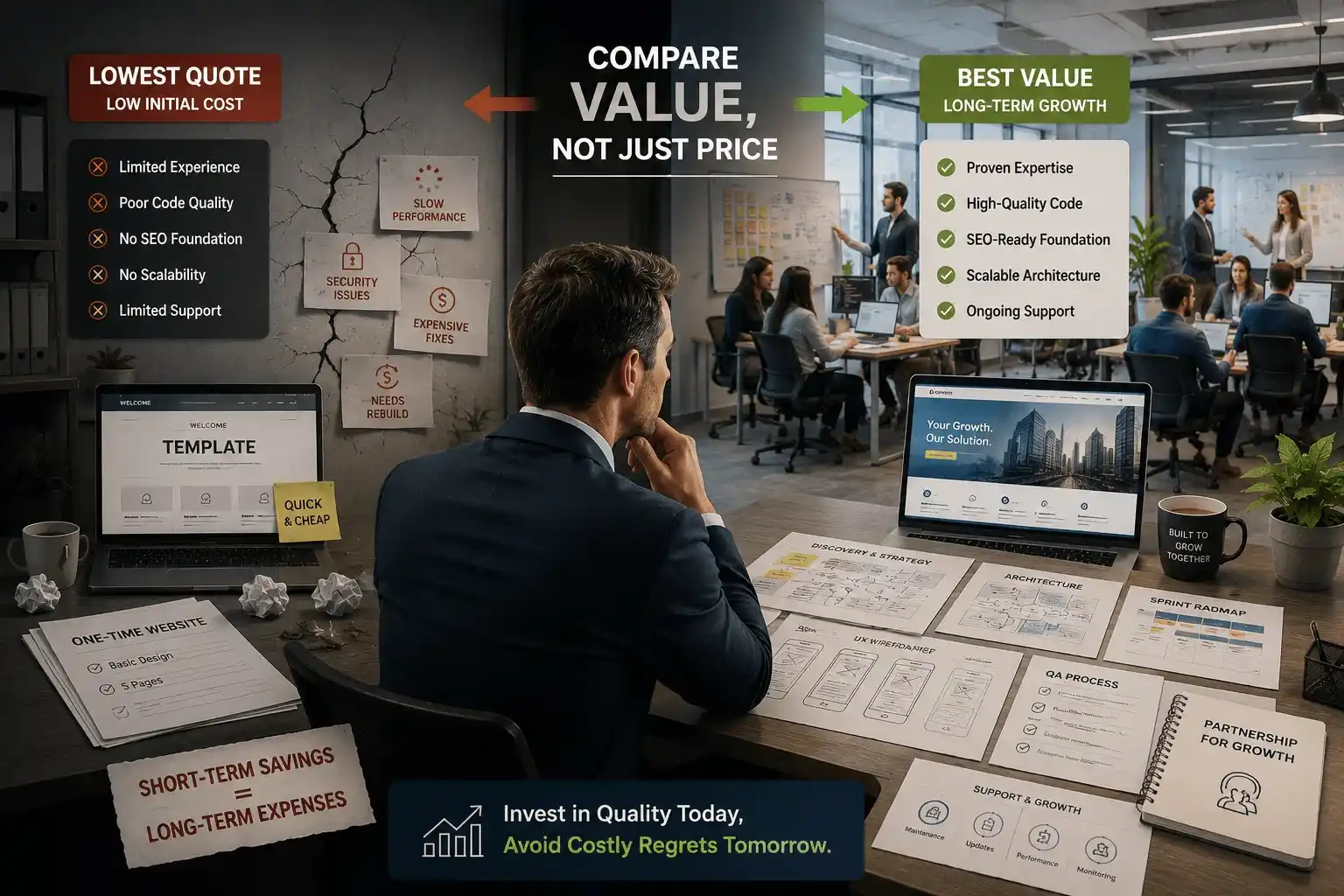
Choosing the lowest quote may reduce upfront costs, but it can lead to expensive fixes or even a complete rebuild if the website isn't built correctly. Instead of comparing agencies based on price alone, evaluate the overall value they deliver.
It's common for businesses to seek a new development partner after choosing the lowest-cost agency. In many cases, the original website lacks scalable code, a solid SEO foundation, or the flexibility needed for future growth, making redevelopment more expensive than investing in quality from the start.
What Does Website Development Typically Cost?
Website costs vary based on project complexity, custom functionality, integrations, and business requirements. These ranges provide a general benchmark.
| Project Type | Typical Cost Range |
|---|---|
| Small Business Website | $3,000–$8,000 |
| Corporate Website | $8,000–$20,000 |
| Ecommerce Website | $8,000–$30,000+ |
| Custom Web Application or Platform | $20,000–$100,000+ |
Note: These are general industry estimates. Actual pricing depends on project scope, functionality, integrations, content requirements, and design complexity.
Price vs. Value Comparison

When comparing proposals, look beyond the initial cost and evaluate what's included.
| Evaluation Factor | Low-Cost Agency | Professional Agency |
|---|---|---|
| Initial Cost | Lower | Higher |
| Customization | Limited | Extensive |
| SEO Readiness | Basic | Advanced |
| Performance | Varies | Optimized |
| Scalability | Limited | High |
| Long-Term ROI | Lower | Higher |
| Support | Limited | Ongoing |
A higher-quality website often delivers better performance, lower maintenance costs, and a stronger return on investment over time.
Questions to Ask Before Hiring a Web Development Company
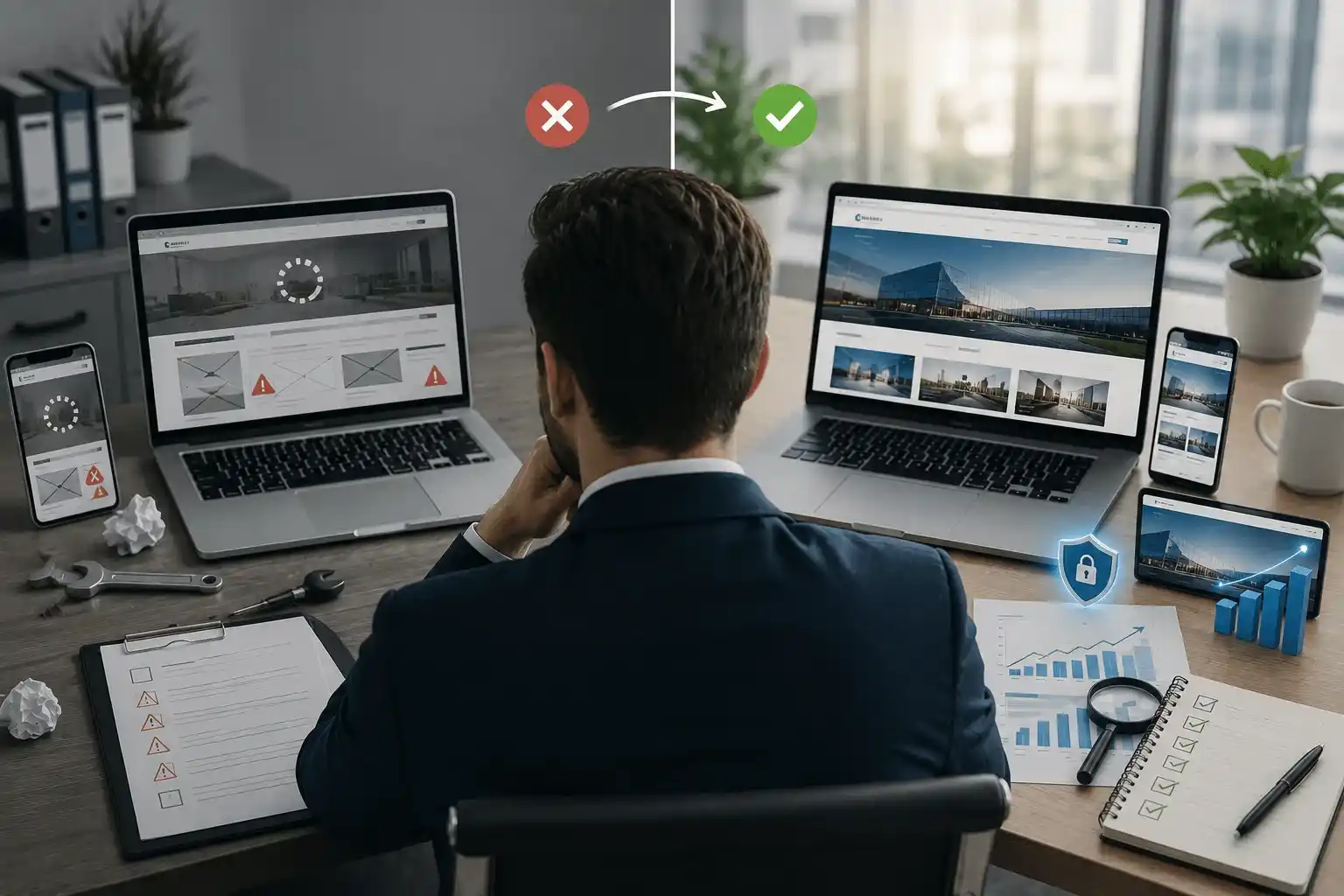
The right questions can reveal how an agency approaches projects, communicates with clients, and supports long-term success.
Before making your decision, ask:
- Have you completed projects similar to ours?
- Which technologies do you recommend, and why?
- Who owns the website after launch?
- How do you approach SEO during development?
- How do you ensure website security and performance?
- What post-launch support do you provide?
- Can the website scale as our business grows?
A reputable web development company should be able to explain its recommendations clearly and answer your questions without relying on technical jargon.
Need Help Evaluating Your Options?
If you're reviewing multiple proposals and aren't sure which agency is the best fit, an experienced development partner can help you evaluate your options before you make a decision.
At MaxCode IT Solutions, we help businesses understand project requirements, compare proposals, and choose the right development approach.
What Questions Should a Web Development Company Ask You?
A professional web development company should spend time understanding your business before discussing design, technology, or pricing. If an agency provides a quote without asking about your goals, it may be offering a generic solution rather than one tailored to your needs.
A good agency should ask questions such as:
| Topic | Why It Matters |
|---|---|
| Business Goals | Aligns the website with measurable business objectives |
| Target Audience | Creates a better user experience |
| Competitors | Identifies opportunities to differentiate your business |
| Customer Journey | Improves conversions and user flow |
| Third-Party Integrations | Identifies required business systems and tools |
| Content Ownership | Clarifies responsibilities and project scope |
| Success Metrics (KPIs) | Defines how success will be measured |
| Future Growth Plans | Ensures the website can scale over time |
The quality of an agency's discovery process often predicts the quality of the final website. The more they understand your business upfront, the better the outcome.
Common Red Flags to Watch For
A reliable web development company should have a structured process, ask thoughtful questions, and provide clear expectations. Be cautious if you notice any of the following warning signs.
| Red Flag | Why It Matters |
|---|---|
| Unrealistically Low Pricing | May indicate shortcuts or hidden costs |
| No Portfolio | Difficult to verify experience |
| No Discovery Process | Suggests a one-size-fits-all approach |
| No Clear Project Scope | Increases the risk of delays and unexpected costs |
| Poor Communication | Leads to misunderstandings |
| No Post-Launch Support | Leaves you without ongoing assistance |
| Guaranteed Rankings or Unrealistic Promises | No agency can guarantee specific search rankings. |
| Generic Proposal | May not address your business needs |
A trustworthy agency sets realistic expectations, explains its process clearly, and is transparent about both capabilities and limitations.
Buyer's Checklist Before Making Your Final Decision
Before signing a contract, use this checklist to compare your shortlisted web development companies.
| Checklist Item | ✓ |
|---|---|
| Business goals clearly defined | ✓ |
| Portfolio reviewed | ✓ |
| Similar projects evaluated | ✓ |
| Technical expertise verified | ✓ |
| Development process explained | ✓ |
| Proposal reviewed and understood | ✓ |
| Pricing compared based on overall value | ✓ |
| Post-launch support confirmed | ✓ |
| Client reviews and case studies | ✓ |
Completing this checklist helps you choose a web development company based on evidence rather than marketing claims.
Conclusion
Choosing a web development company is a strategic business decision, not simply a comparison of prices or features. The right partner should understand your goals, communicate clearly, demonstrate relevant experience, and deliver a website that supports long-term business growth.
Before making your decision, compare agencies based on their expertise, development process, transparency, and the overall value they provide—not just the initial project cost. Taking the time to evaluate your options carefully today can help you avoid costly mistakes and build a website that delivers lasting results.
Why Businesses Choose MaxCode IT Solutions
Choosing the right web development company is about finding a partner that understands your business, not just one that can build a website.
At MaxCode IT Solutions, we're happy to help you review your requirements, compare proposals, and understand which development approach best fits your business.
Whether you're planning a new website or evaluating multiple development partners, our team can help you make an informed decision.
Ready to build a website that supports your business goals?
Contact MaxCode IT Solutions to discuss your project with our team.
Frequently Asked Questions
1. How do I choose the best web development company?
Evaluate each company based on its portfolio, technical expertise, development process, communication, pricing transparency, and post-launch support. Choose a partner that understands your business goals rather than offering a one-size-fits-all solution.
2. What should I look for in a web development company?
Look for relevant experience, a strong portfolio, transparent communication, technical expertise, a structured development process, and ongoing support.
3. How much should I expect to pay for a professional website?
Website costs vary depending on the project's complexity, functionality, integrations, and business requirements. Rather than choosing the lowest quote, compare proposals based on the overall value and long-term return on investment.
4. Should I choose the cheapest web development company?
Not necessarily. A lower upfront price can result in higher long-term costs if the website requires significant fixes or redevelopment. Consider the agency's expertise, quality, and long-term support instead of price alone.
5. What post-launch support should a web development company provide?
A reliable agency should offer ongoing maintenance, security updates, bug fixes, performance optimization, backups, and technical support to keep your website running effectively.
6. How long does it take to develop a website?
Project timelines depend on complexity. A small business website may take 3–6 weeks, while larger corporate websites typically take 6–10 weeks, ecommerce websites 8–16 weeks, and custom web applications several months.
7. Why should I hire a professional web development company instead of using a website builder?
Website builders can be suitable for simple websites, but a professional web development company can create a scalable, high-performance solution tailored to your business goals, with greater flexibility, stronger SEO, and support for future growth.
Author:

By day, Naina Veerwani wrangles tech trends and leads the charge as CXO at Maxcode IT Solutions Pvt. Ltd with her eight years of industry experience. By night (or whenever inspiration strikes!), she transforms into a content-crafting ninja, crafting insightful blog posts to feed your tech knowledge appetite. When she's not wielding words, you can find her obsessing over the latest tech breakthroughs and social media trends or sometimes over tasty food.