
Your vocation, our passion
We are your one stop creative agency providing
Business IT Services.
Top Notch Digital Marketing Agency that drives revenue
and propel your business to new heights.
We create value for industries like Fin-tech |
Healthcare | Ed-tech | Beauty | Travel | E-commerce
and more.
How AI Is Changing Web Development: 12 Ways AI Is Making Websites Smarter
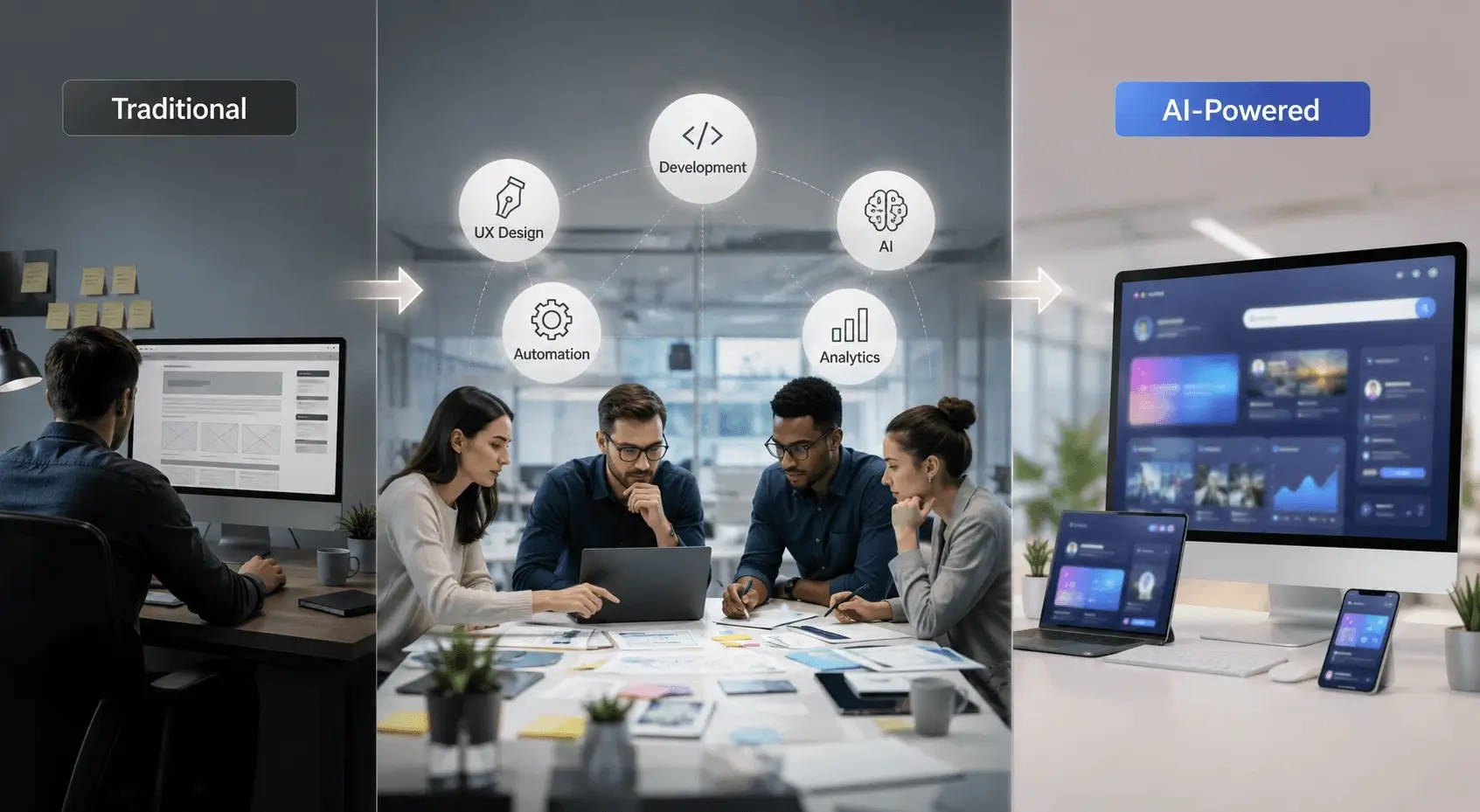
AI is changing web development by making websites more personalized, automated, secure, and responsive. AI can power intelligent search, chatbots, recommendations, predictive analytics, workflow automation, and performance optimization. For businesses, these capabilities can improve user experience, automate repetitive work, increase conversions, and support better decision-making.
Why AI Is Reshaping Web Development
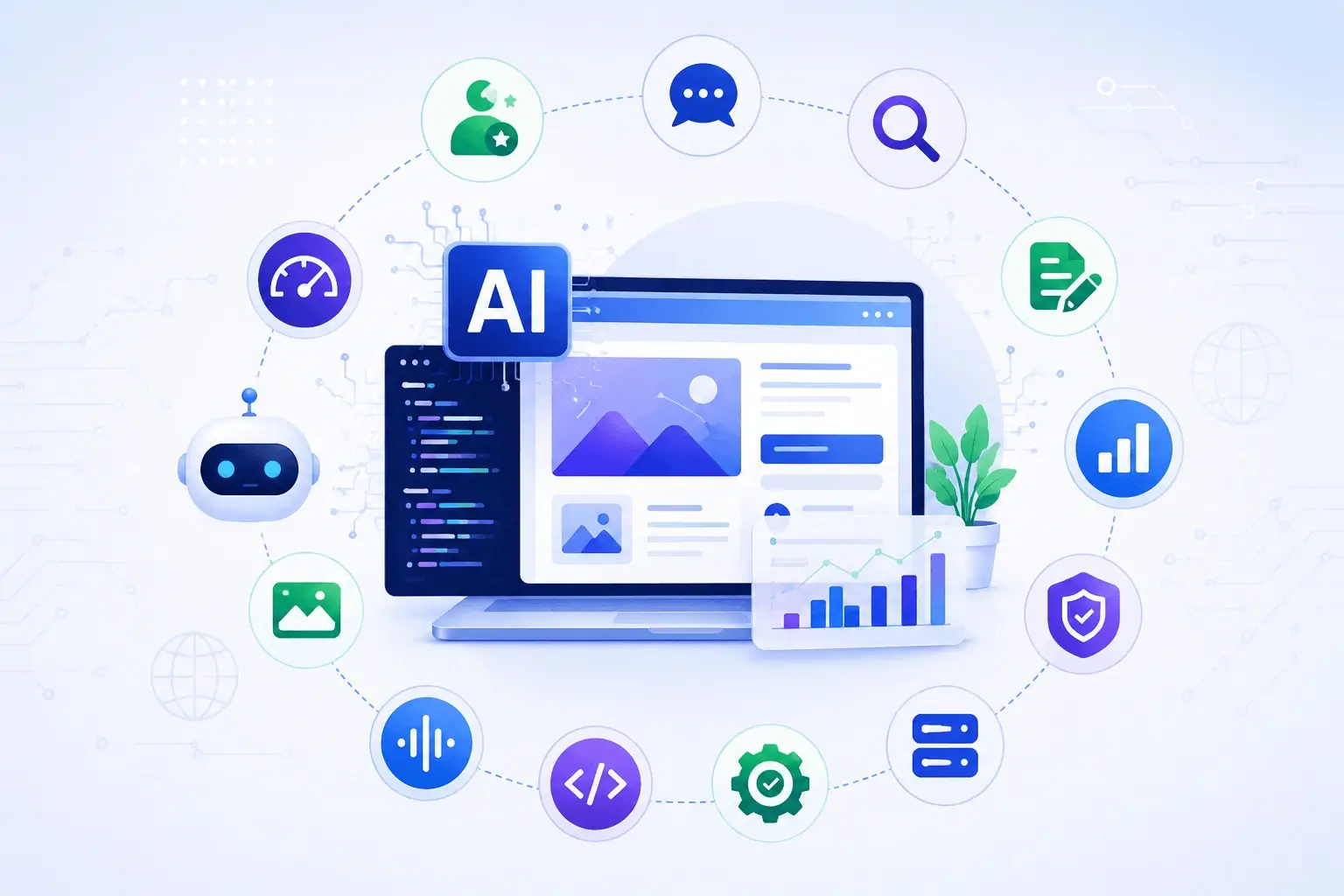
Websites are no longer just online brochures. Users now expect instant answers, personalized recommendations, intelligent search, and seamless digital experiences.
AI is helping websites meet these expectations by analyzing user behavior, automating repetitive tasks, and delivering more relevant interactions.
From AI-powered search and chatbots to predictive analytics and workflow automation, businesses are using AI to improve customer experiences and operate more efficiently. Whether you're launching a new website or modernizing an existing platform, AI in web development can help create more responsive, data-driven digital experiences.
In this guide, we'll explore 12 practical ways AI is transforming web development, along with implementation best practices and how businesses can adopt AI strategically.
AI is changing websites from passive information pages into active business tools that can respond to users, automate tasks, and support decision-making.
AI is influencing nearly every stage of the web development lifecycle—from how websites are designed and built to how they interact with users after launch. The following examples highlight some of the most impactful ways businesses are using AI to improve digital experiences.
Traditional Websites vs AI-Powered Websites
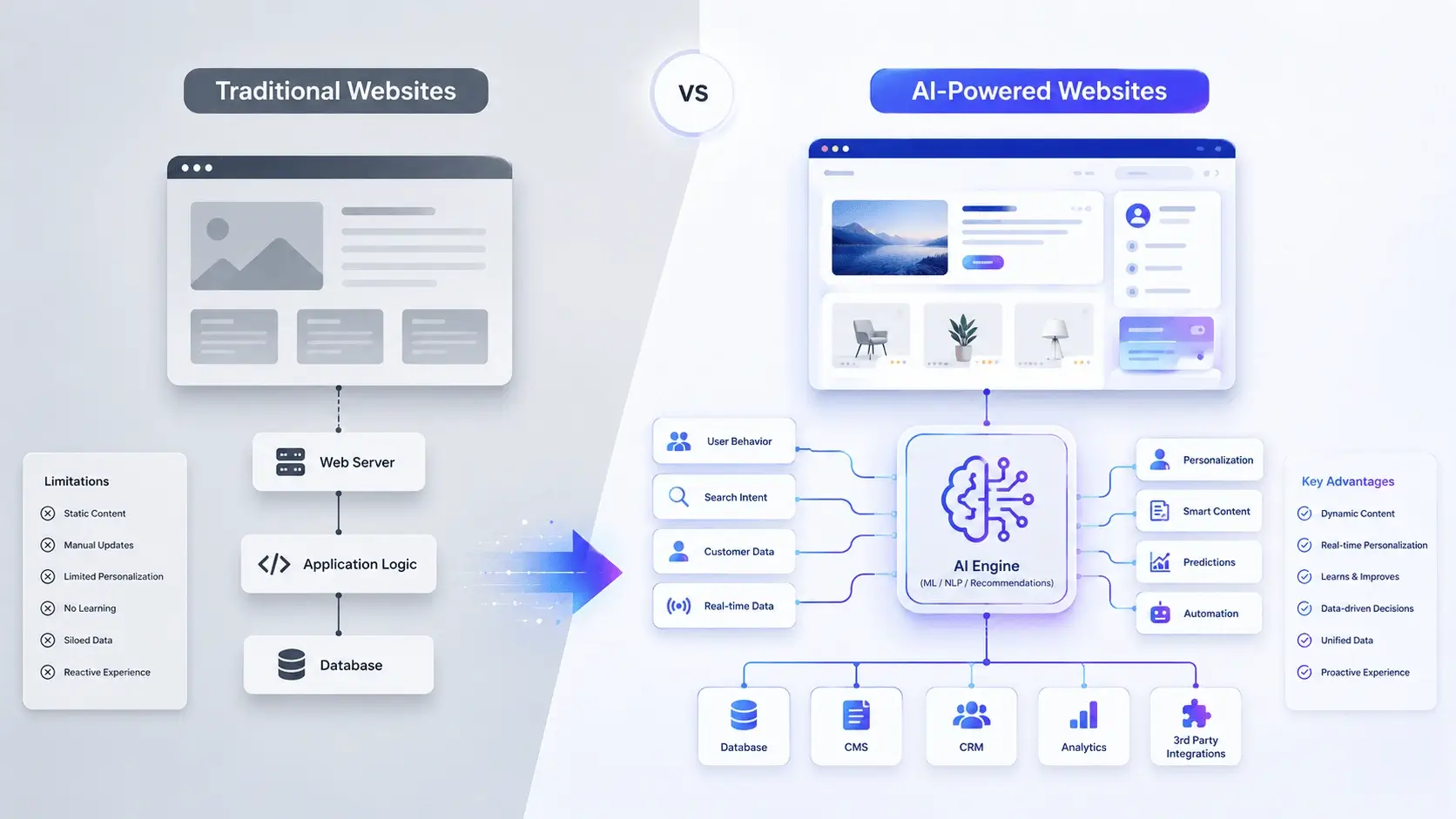
AI doesn't replace every traditional web development approach. Instead, it adds capabilities that allow websites to respond to users, automate processes, and use data more effectively.
| Traditional Approach | AI-Powered Approach |
|---|---|
| Mostly static content | Dynamic, personalized content |
| Manual workflows | AI-assisted automation |
| Keyword-based search | Semantic and conversational search |
| Generic recommendations | Personalized recommendations |
| Fixed customer journeys | Adaptive user experiences |
| Historical reporting | Predictive analytics |
| Manual monitoring | Automated anomaly detection |
| Reactive optimization | Data-driven continuous optimization |
12 Ways AI Is Changing Web Development
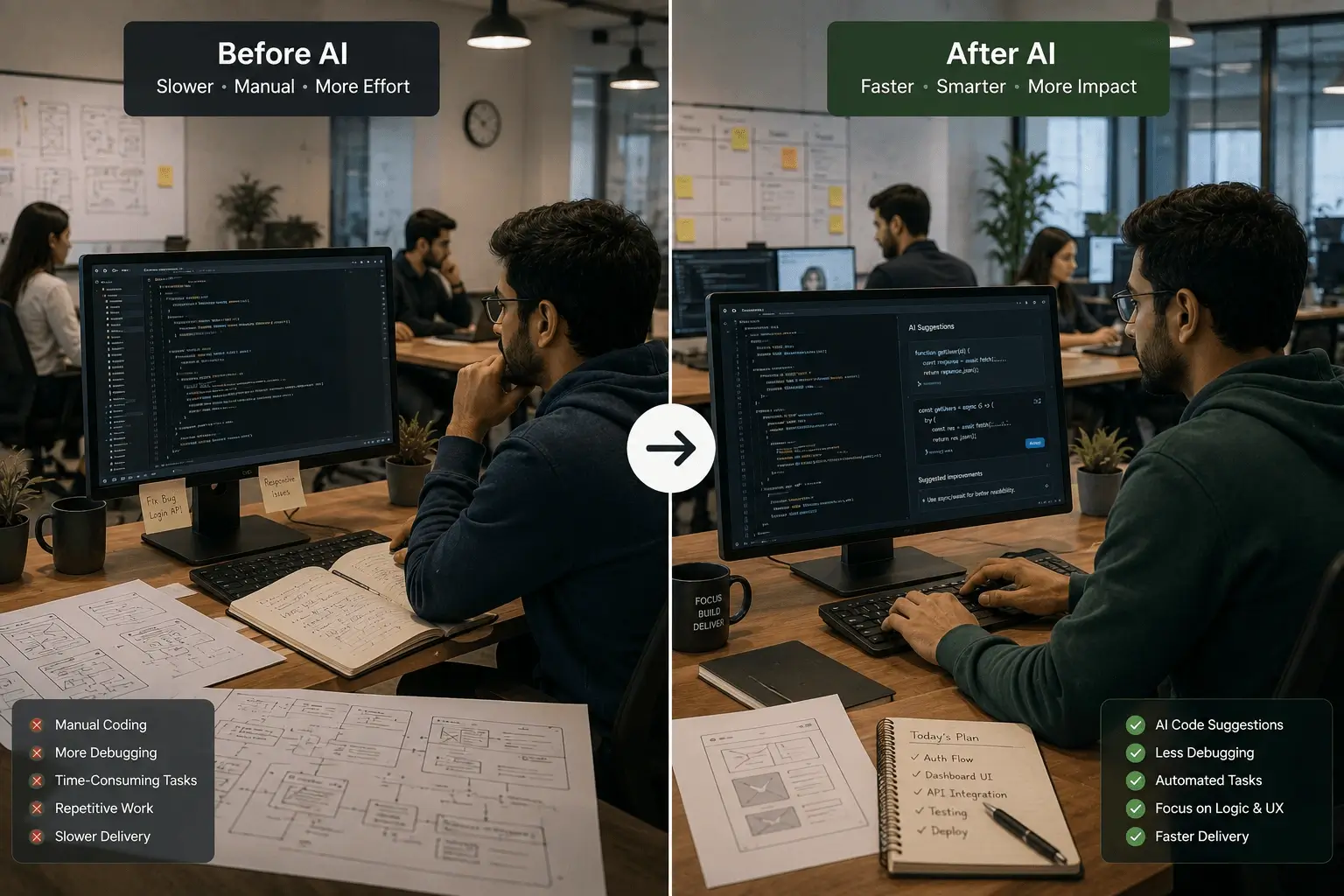
1. Personalized User Experiences
Every visitor behaves differently.
AI can analyze signals such as browsing behavior, previous interactions, device type, and purchase history to personalize the website experience.
Examples include:
- Personalized homepages
- Dynamic content
- Product recommendations
- Personalized offers
- Customized navigation
Personalization can make website experiences more relevant by showing users content, products, or actions based on their needs and previous interactions.
Example: An e-commerce store can show different product recommendations to first-time and returning visitors based on browsing history and previous purchases.
2. Smarter Website Search
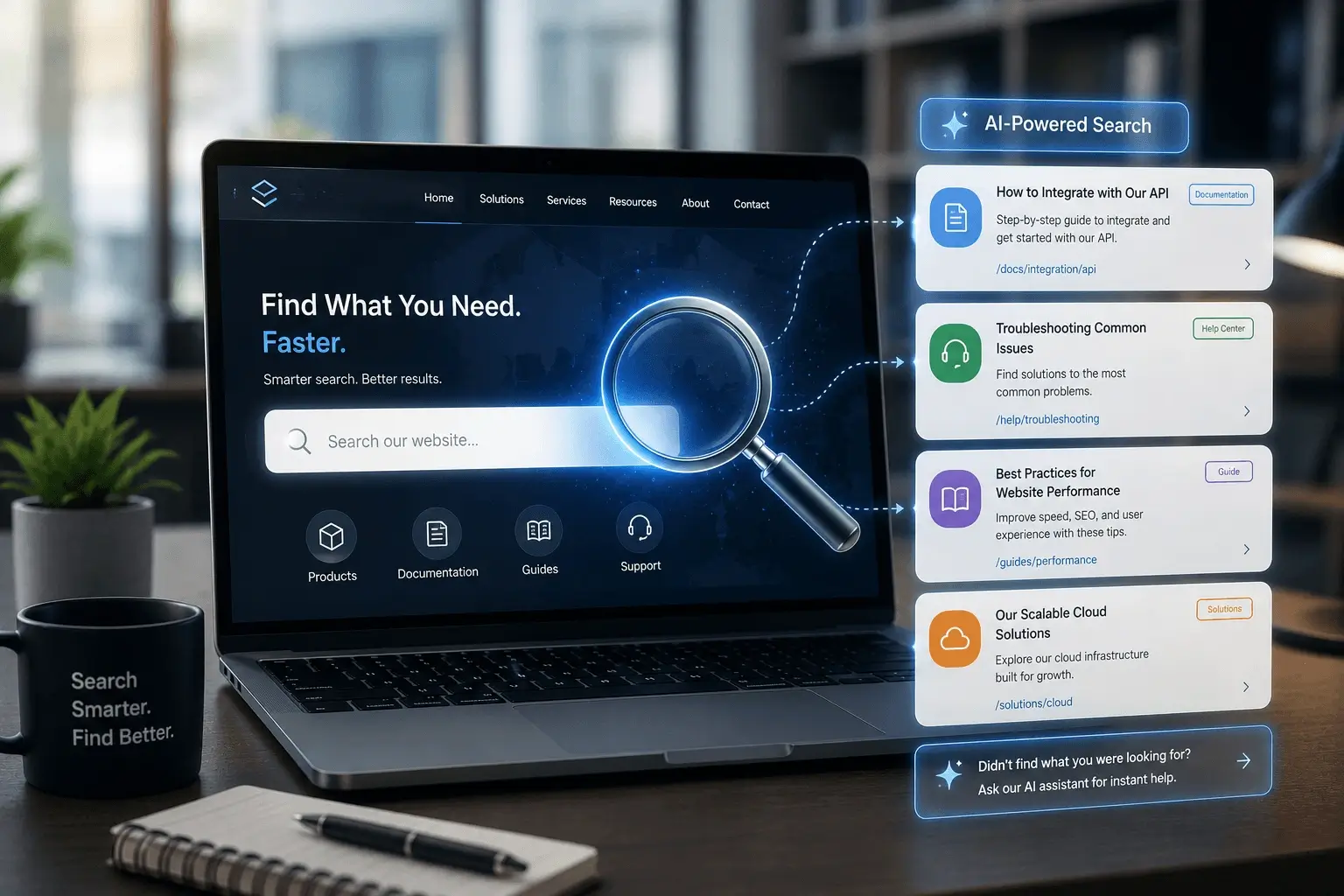
Traditional search often relies heavily on keyword matching.
AI-powered search understands intent.
Users can type conversational questions instead of exact product names.
Benefits include:
- Better search accuracy
- Faster product discovery
- Higher customer satisfaction
- Reduced bounce rates
AI-powered web applications can use semantic search to understand the meaning behind a query rather than relying only on exact keyword matches.
Example: A furniture website could understand a search such as "I need a compact desk for a small bedroom" and return products based on size, use case, and available features.
3. AI Chatbots and Virtual Assistants
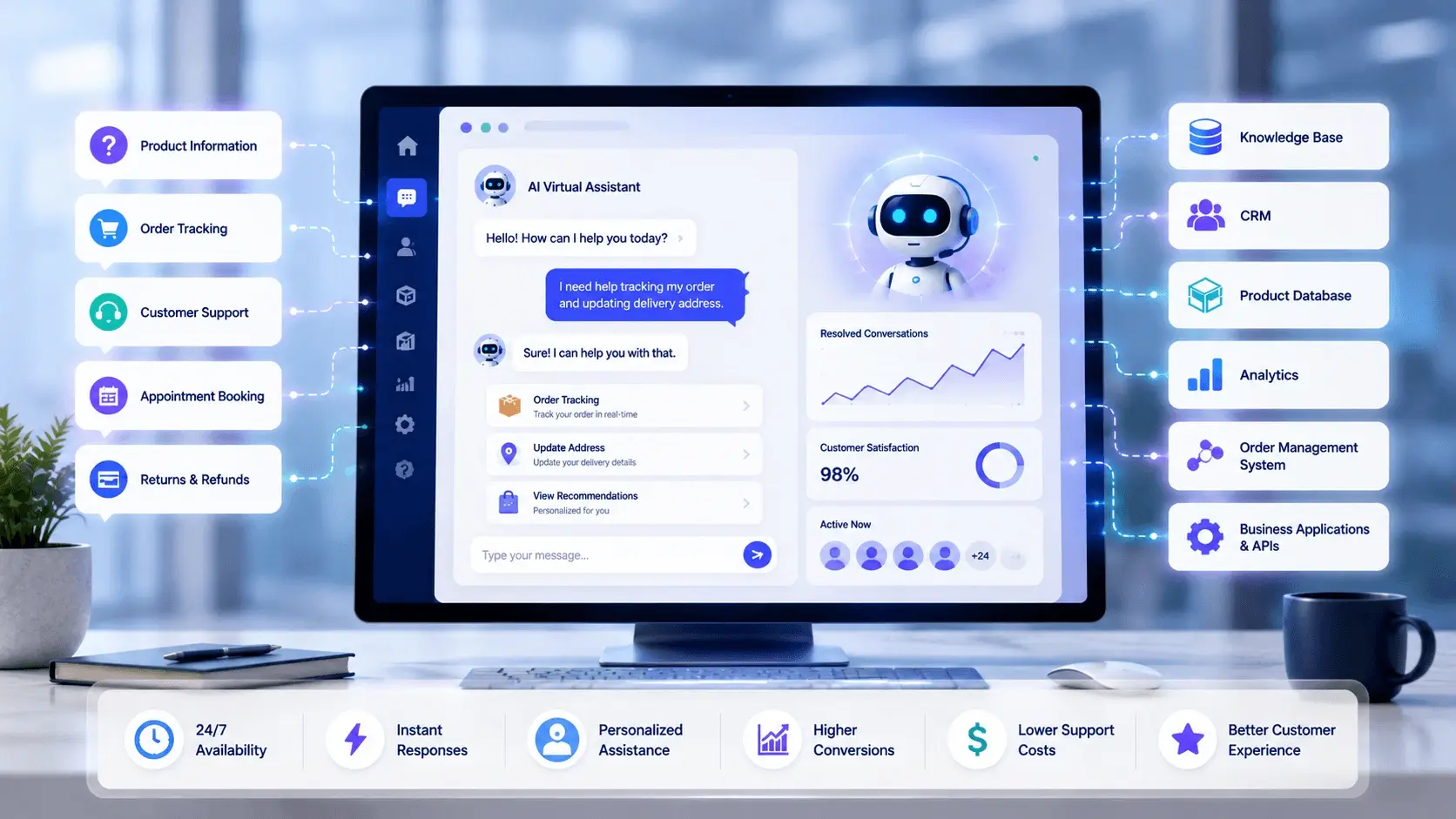
Customer support has changed dramatically.
AI assistants can provide support outside traditional business hours.
AI assistants can:
- Answer common questions
- Schedule meetings
- Recommend products
- Collect leads
- Escalate complex issues
Modern AI assistants can understand natural language, maintain conversation context, and connect with business systems such as CRMs and knowledge bases.
When connected to business systems, AI assistants can provide more relevant support while reducing the workload on customer service teams.
Businesses should measure chatbot success by completed customer tasks, resolution rates, lead quality, and customer satisfaction rather than conversation volume alone.
4. Intelligent Content Recommendations
Streaming platforms popularized recommendation engines.
Now websites across every industry use similar technology.
AI recommends:
- Articles
- Products
- Services
- Videos
- Learning resources
Relevant recommendations can encourage users to explore additional content, products, or services.
Example: An online learning platform can recommend the next course based on a user's completed lessons, interests, and learning progress.
5. Predictive Analytics
AI helps businesses understand what customers may do next.
Traditional analytics often focuses on past behavior, while predictive analytics uses historical and current data to estimate likely future outcomes.
Examples include:
- Purchase likelihood
- Customer churn
- Lead quality
- Inventory demand
- Marketing performance
This allows businesses to make proactive decisions.
Example: A SaaS company can identify trial users who show strong buying signals and trigger targeted follow-up campaigns before the trial period ends.
6. Automated Customer Workflows
AI no longer supports only customer-facing interactions.
It also automates internal business operations.
Examples include:
- Lead qualification
- Appointment scheduling
- CRM updates
- Email routing
- Document processing
- Follow-up reminders
AI automation can reduce repetitive manual work and allow employees to focus on tasks that require human judgment.
Example: A business can automatically route new leads to the right sales representative, update the CRM, schedule follow-ups, and notify the team when human intervention is required.
Common Mistakes Businesses Make When Implementing AI
AI delivers the most value when it solves a clearly defined business problem. However, organizations can struggle when they focus on the technology before identifying the problem they want to solve.
Some of the most common mistakes include:
- Implementing AI without clear business objectives
- Automating processes that already work well
- Using poor-quality or incomplete data
- Ignoring customer privacy and security requirements
- Expecting AI to replace human expertise entirely
- Choosing generic AI tools instead of solutions tailored to business needs
Starting with one high-impact use case and expanding gradually can make implementation easier to manage, measure, and optimize.

7. Better Website Performance Optimization
AI also helps improve website performance behind the scenes.
AI can analyze:
- Slow pages
- User behavior
- Broken experiences
- Conversion bottlenecks
- Resource usage
By analyzing website data, AI can help identify patterns and highlight potential performance issues that may require attention.
For example, AI can identify recurring performance problems among specific devices, browsers, traffic sources, or user journeys. Developers can then investigate these patterns and address the underlying issues.
This makes AI a useful tool for ongoing website performance monitoring and optimization.
8. Enhanced Website Security
Cyber threats continue to evolve.
AI can help identify unusual behavior that may indicate potential security threats.
Examples include:
- Fraud detection
- Login anomaly detection
- Bot identification
- Suspicious transaction monitoring
- Malware detection
AI-based security systems can analyze large volumes of activity and identify patterns associated with suspicious logins, fraudulent transactions, bots, or abnormal traffic. These systems can complement traditional security controls by helping teams detect potential threats more efficiently.
When implemented carefully, AI-based security tools can improve threat detection while minimizing unnecessary friction for legitimate users.
AI can strengthen website security, but it should complement—not replace—secure coding practices, access controls, monitoring, and regular security testing.
9. Smarter Forms
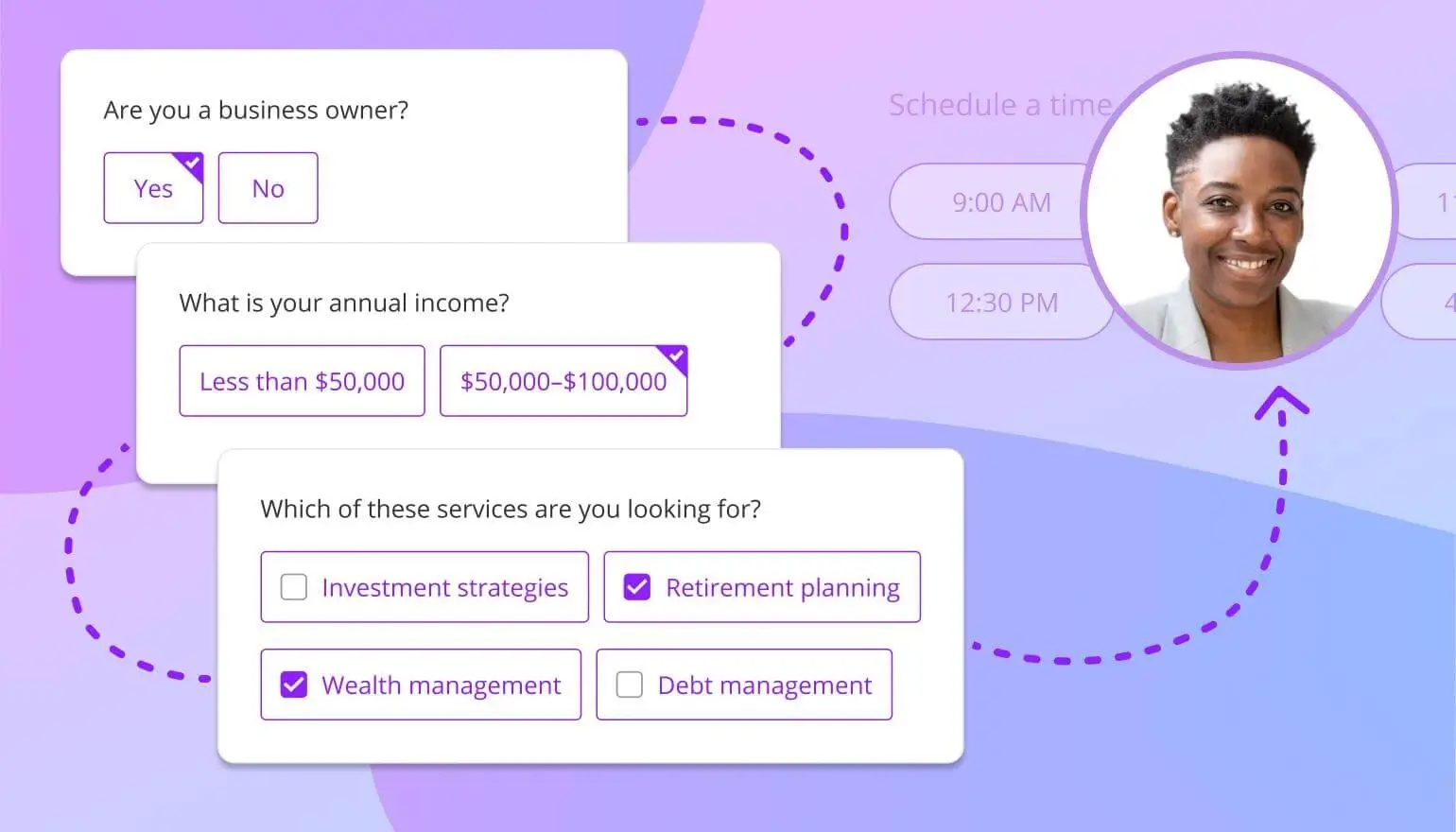
Long forms reduce conversions.
AI simplifies data collection.
Examples include:
- Auto-completion
- Intelligent validation
- Dynamic fields
- Smart recommendations
- Error prevention
These features can make forms faster to complete, reduce errors, and improve the overall user experience.
Example: An insurance website can automatically adjust its application form based on a customer's previous answers, displaying only relevant questions. This shortens the application process, reduces errors, and improves completion rates.
10. AI-Powered Content Assistance

Businesses regularly publish blogs, product pages, and documentation.
AI supports content teams by helping with:
- Draft generation
- Content summaries
- Metadata suggestions
- Internal linking ideas
- Content organization
Human review remains essential for factual accuracy, originality, brand consistency, and subject-matter expertise.
Businesses should treat AI as a productivity tool rather than a replacement for experienced writers and subject-matter experts. Human oversight helps ensure that content remains accurate, original, useful, and aligned with the brand's voice.
11. Intelligent Business Dashboards
AI transforms raw business data into meaningful insights.
Instead of reading multiple reports, decision-makers receive:
- Trend summaries
- Performance alerts
- Revenue forecasts
- Customer behavior insights
- Opportunity recommendations
AI-generated summaries can highlight important trends, potential risks, and opportunities that require attention.
This improves decision-making across departments.
12. Continuous Website Improvement
Traditional websites typically rely on developers, marketers, and analytics teams to identify and implement improvements.
AI can analyze user behavior and website data to identify patterns that inform ongoing improvements.
It identifies:
- Drop-off points
- Navigation issues
- Popular features
- High-performing pages
- Conversion opportunities
These insights allow businesses to make optimization decisions based on real user behavior rather than assumptions alone.
Over time, this creates a data-driven optimization cycle in which user behavior informs testing, refinement, and future website improvements.
Should Every Business Add AI?
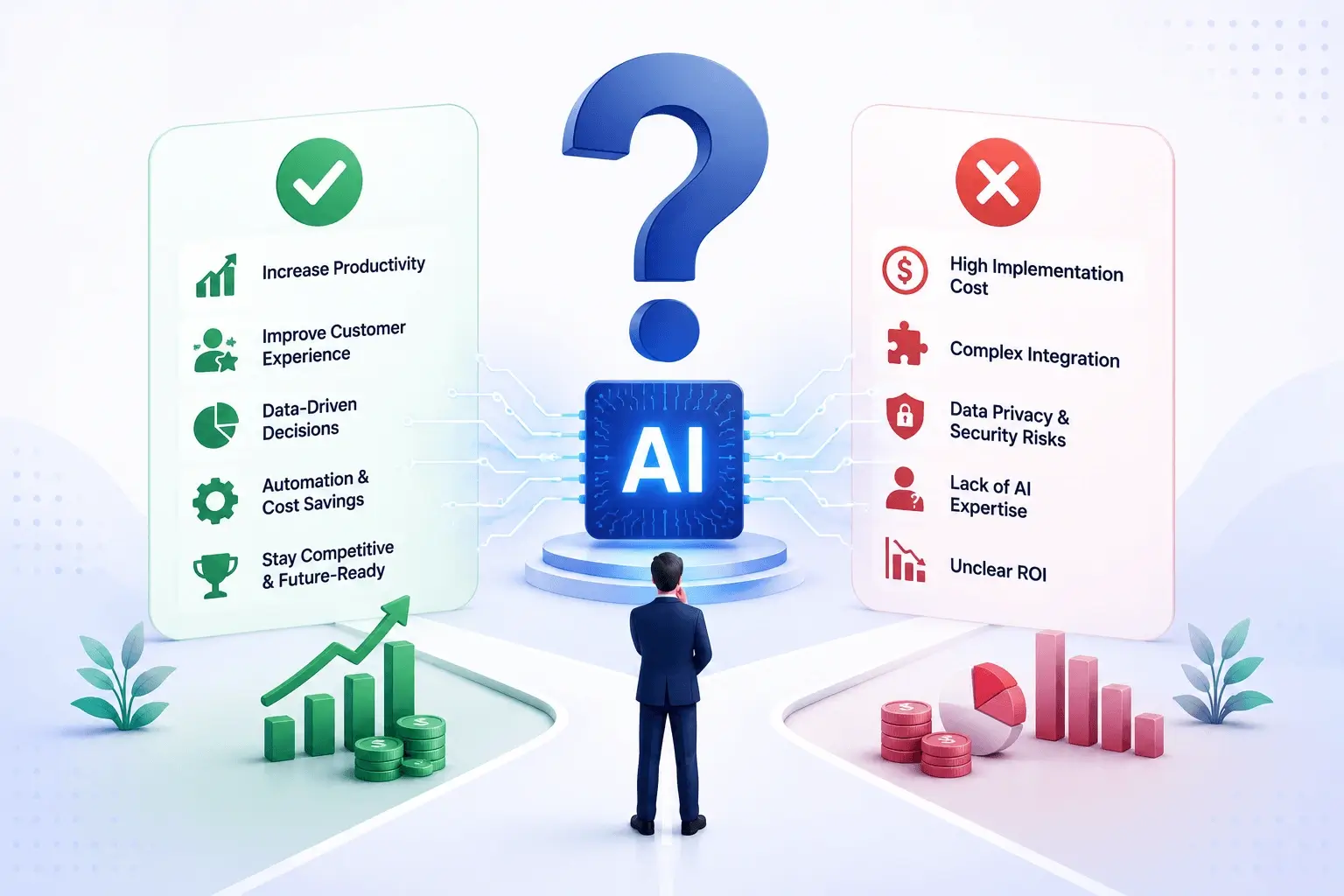
Not necessarily.
Businesses should adopt AI when it addresses a clearly defined business challenge and delivers measurable value.
AI delivers the greatest value when organizations need to:
- Improve customer experience
- Automate repetitive work
- Increase conversions
- Analyze large datasets
- Personalize content
- Scale operations efficiently
Adding AI simply because competitors use it rarely produces meaningful results.
| Business Need | Is AI a Good Fit? |
|---|---|
| Better customer support | Often yes |
| Personalized shopping | Often yes |
| Workflow automation | Often yes |
| Basic informational website | Usually no |
| Small portfolio website | Usually no |
| Large ecommerce store | Strong potential |
| Enterprise operations | Strong potential |
Who Can Benefit From AI Web Development?
AI-powered web development can be useful for businesses that need to handle large amounts of customer data, automate repetitive processes, personalize digital experiences, or provide support at scale.
Common use cases include:
- Ecommerce: Product recommendations, AI search, customer support, and personalized offers.
- SaaS: Lead qualification, onboarding, predictive analytics, and customer support.
- Healthcare: Intelligent search, appointment assistance, and administrative automation.
- Education: Personalized learning recommendations and AI-powered assistants.
- Real estate: Property recommendations, lead qualification, and conversational search.
- Finance: Fraud detection, customer support, and automated workflows.
- Travel: Personalized recommendations, conversational assistants, and booking support.
However, the best AI solution depends on the business's specific goals, available data, existing systems, and customer needs.
Future Trends in AI Web Development
The future of AI in web development extends beyond chatbots and basic automation. Emerging technologies are making websites more capable of understanding context, processing different types of input, and assisting with complex tasks.
Some emerging trends include:
- AI agents: Systems that can perform multi-step tasks on websites instead of simply answering questions.
- Voice-first experiences: Websites that allow users to interact through natural voice commands.
- Multimodal search: Search experiences that combine text, voice, images, and other inputs.
- Hyper-personalized experiences: Websites that adapt content and recommendations to individual users.
- AI-assisted development: Tools that help developers design, code, test, and optimize websites more efficiently.
- Proactive customer support: Systems that identify potential customer needs or issues before they become support requests.
- Intelligent workflow automation: AI systems that coordinate multiple steps across business tools and processes.
As these technologies mature, websites may become more proactive rather than simply reactive. Instead of waiting for users to search, submit forms, or request assistance, AI-enabled systems may anticipate likely needs and help complete routine tasks. Businesses that experiment with these technologies can better understand where AI creates measurable value for their customers and operations.
How to Implement AI in Web Development Successfully

Successful projects begin with business objectives instead of technology.
Consider the following approach.
| Step | Goal |
|---|---|
| Identify business challenges | Define measurable objectives |
| Prioritize AI opportunities | Focus on highest-value opportunities |
| Select the right AI models | Balance cost and performance |
| Integrate existing systems | Preserve current workflows |
| Test with real users | Validate business outcomes |
| Continuously optimize | Improve using real-world data |
Rather than deploying multiple AI features at once, businesses can start with one high-impact use case, measure the results, and expand gradually.
A phased implementation can reduce risk and make it easier to measure the value of each AI initiative before expanding further.
Businesses should define measurable success metrics before implementation. These might include conversion rates, support resolution times, qualified leads, task completion rates, customer satisfaction, or hours saved through automation.
Start with one high-value business problem, measure the results, and expand only after the initial implementation proves its value.
Conclusion
Artificial intelligence is changing web development from static website building into a more intelligent, data-driven process. AI can personalize experiences, improve search, automate workflows, support customer service, strengthen security, and help businesses make better decisions.
However, AI should not be added simply because it is trending. The strongest implementations start with a clear business problem, use the right technology, and measure results over time.
For businesses planning their next website or improving an existing platform, AI can be a practical way to create better digital experiences while improving operational efficiency.
Ready to Build an AI-Powered Website?
AI doesn't always mean rebuilding your entire website. The right solution could be as simple as adding AI-powered search, automating lead qualification, introducing a virtual assistant, or personalizing customer experiences.
At Maxcode IT Solutions, we combine custom web development with AI technologies to build intelligent, scalable digital solutions around specific business goals.
From AI-powered search and virtual assistants to workflow automation and predictive analytics, our team can help you identify practical AI opportunities and turn them into reliable web solutions.
Ready to explore how AI could improve your website? Talk to our team about your project.
Frequently Asked Questions
What is AI in web development?
AI in web development refers to the use of artificial intelligence to improve website functionality, personalize user experiences, automate repetitive tasks, enhance security, and generate business insights.
What are the benefits of AI in web development?
AI can help websites personalize user experiences, improve search, automate repetitive tasks, provide faster customer support, analyze business data, detect unusual activity, and optimize website performance. The right benefits depend on the website's goals, users, data, and existing technology.
Can AI build an entire website?
AI can assist with website design, content generation, coding, testing, and optimization, but experienced developers are still essential for architecture, custom functionality, integrations, and strategic planning.
Is AI replacing web developers?
No. AI enhances developer productivity by automating repetitive work, but human expertise remains necessary for problem-solving, system design, security, and user experience.
What industries benefit most from AI-powered websites?
Industries such as ecommerce, healthcare, finance, education, manufacturing, logistics, real estate, travel, and SaaS can benefit from AI-powered websites through automation, personalization, and improved customer experiences.
How much does AI website development cost?
The cost depends on the complexity of the project, the AI features required, existing system integrations, and customization needs. Simple AI integrations may require minimal investment, while enterprise AI platforms involve more extensive development.
Can AI improve SEO on a website?
Yes. AI can support SEO by helping identify content opportunities, optimize metadata, analyze search intent, suggest internal links, and identify potential technical issues. However, effective SEO still requires human strategy, high-quality content, technical expertise, and ongoing optimization.
Industry References
- Google – PageSpeed Insights
- IBM – Cost of a Data Breach Report
- McKinsey & Company – The Value of Getting Personalization Right
- Gartner – Research on Artificial Intelligence Adoption
Author:

By day, Naina Veerwani wrangles tech trends and leads the charge as CXO at Maxcode IT Solutions Pvt. Ltd with her eight years of industry experience. By night (or whenever inspiration strikes!), she transforms into a content-crafting ninja, crafting insightful blog posts to feed your tech knowledge appetite. When she's not wielding words, you can find her obsessing over the latest tech breakthroughs and social media trends or sometimes over tasty food.